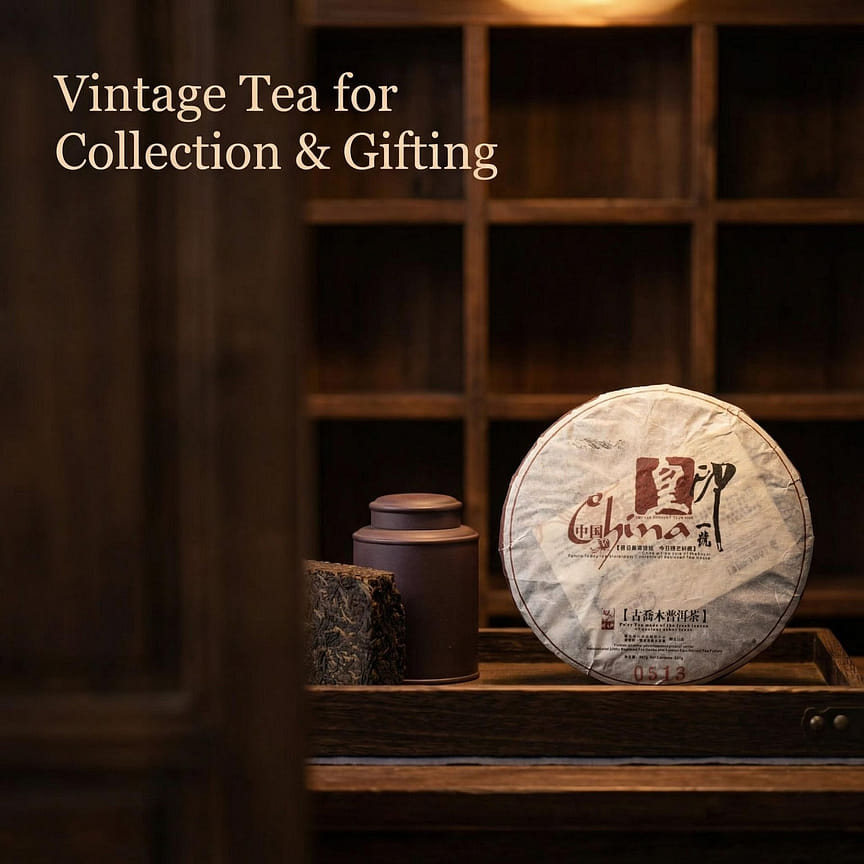
2005 Yunnan Ancient Arbor Aged Ripe Pu'er Tea 357 g
$21.35/oz
Chi Tiết
Nguồn gốc:Trung Quốc Đại LụcSố lượng:357 g
Mô tả
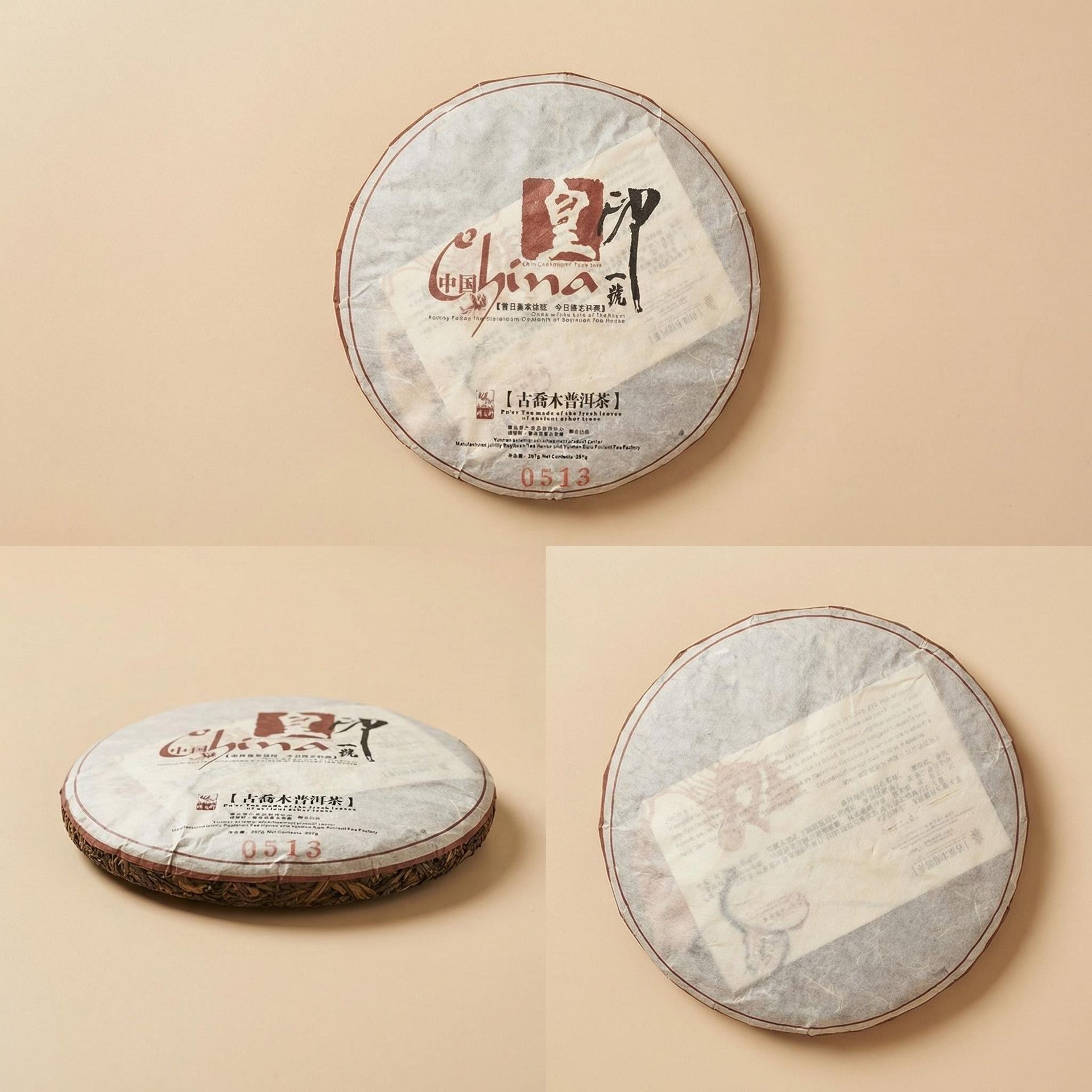
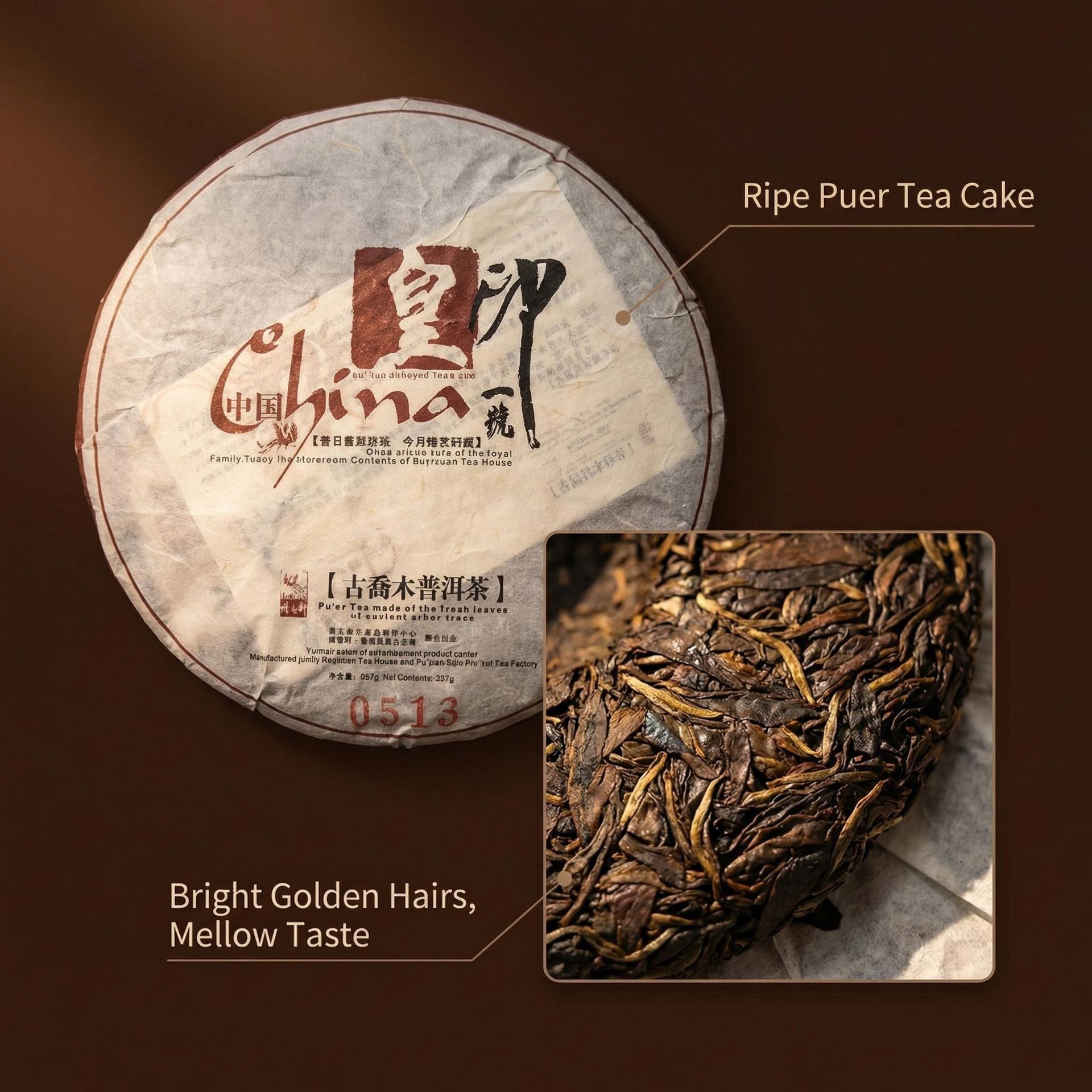
2005 Ripe Pu'er Tea – Full Introduction (English Translation)
The 2005 ripe Pu'er tea is now at its golden drinking age. After nearly 20 years of aging, it features a mellow, smooth, and gentle taste, making it an excellent choice for both drinking and collection. Below is a detailed introduction covering production, advantages, health benefits, and brewing methods.
I. Production Process: Core is Piled Fermentation
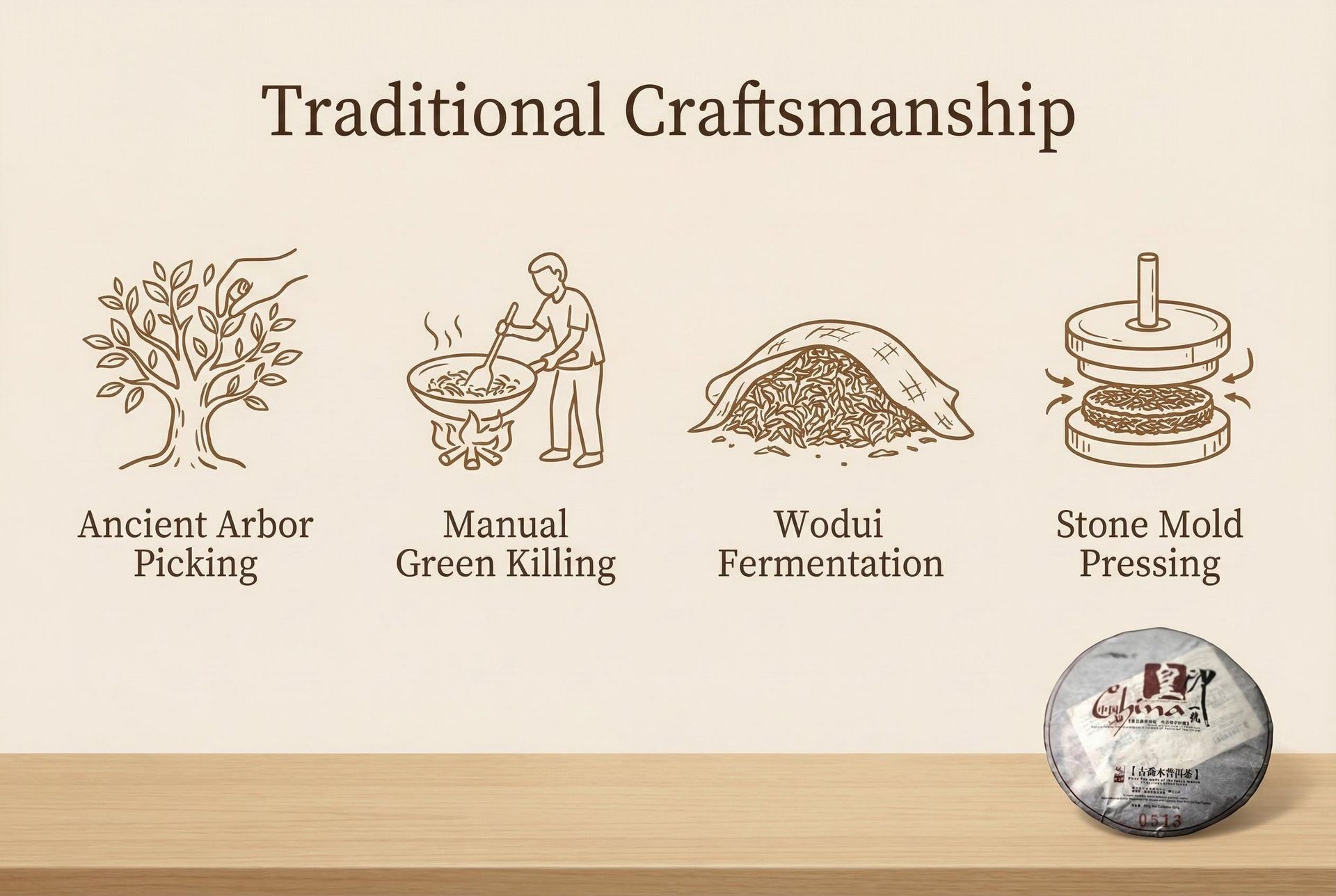
2005 was a key period for the standardization of the Pu'er tea industry, with mature and stable processing following traditional methods:
- Raw Material Preparation: Selected Yunnan large-leaf sun-dried maocha, with solid and high-quality raw materials.
- Piled Fermentation (Key Step): The maocha is piled 1–2 meters high, sprinkled with water, and covered for heat preservation. Fermentation lasts 40–70 days under microbial and humid-heat effects. The pile is turned every 5–10 days to ensure even temperature and avoid over-fermentation inside.
- Drying & Sorting: After fermentation, the tea is spread and dried, then sieved and sorted to remove impurities.
- Steaming & Pressing: Steamed and pressed into cakes, bricks, or tuocha. Most 2005 products are standard 357g tea cakes.
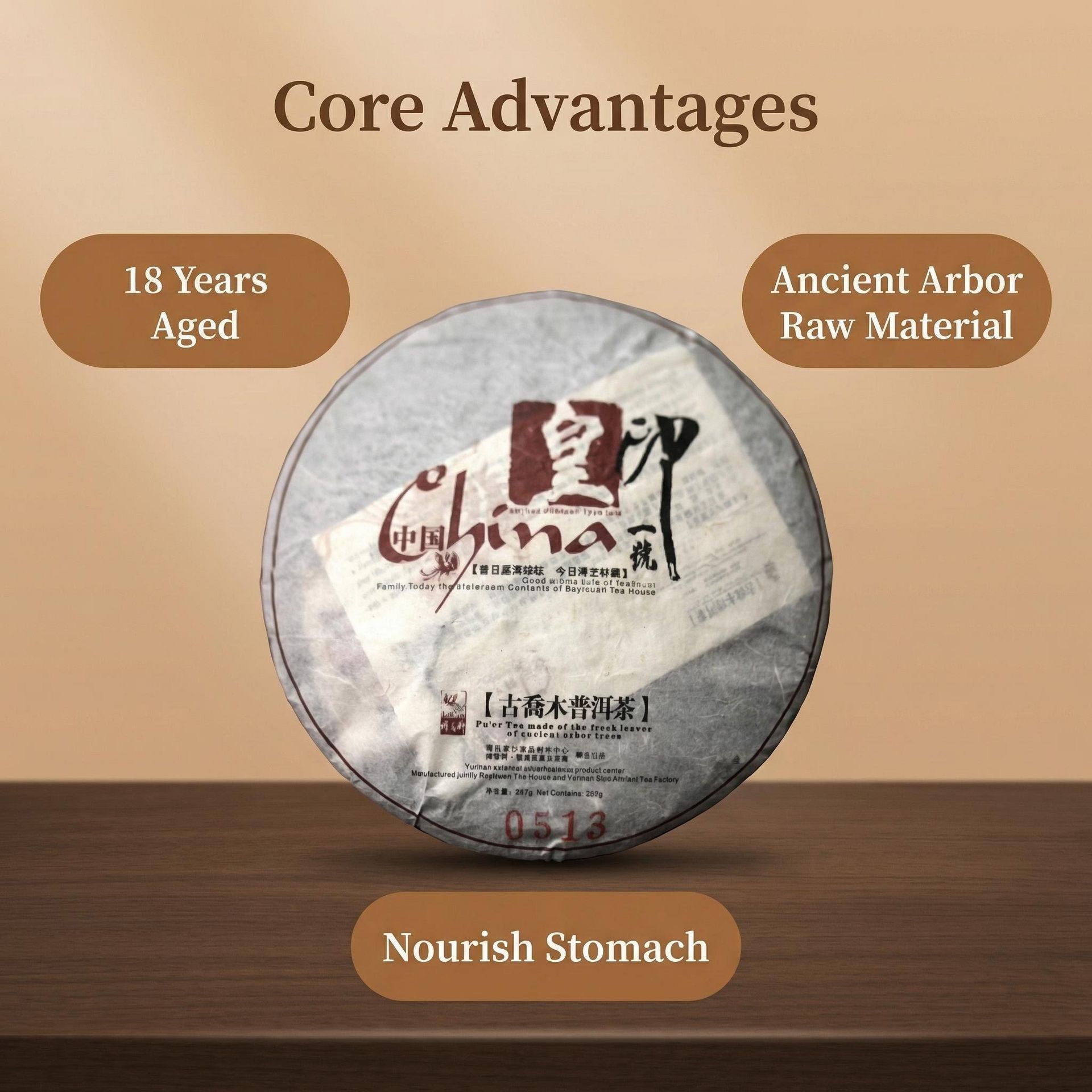
- Aging: Aged in a dry and ventilated environment for 18 years, allowing fermentation odors to fade and develop aged fragrance, jujube aroma, and other high-quality notes.
II. Core Advantages: Distinct Characteristics of Aged Tea
- Taste: Thick, smooth, glutinous, and mellow; full-bodied with soft sweetness, no irritation of new tea.
- Aroma: Gradually transforms from initial aged notes into sweet, ginseng, or jujube aromas with rich layers.
- Liquor Color: Deep red, bright, amber or reddish-brown, with excellent visual texture.
- Durability: Stable content after 20 years; can be brewed more than 8–12 infusions, still sweet in later steeps.
- Stability: Standardized processing in 2005 and proper aging ensure consistent quality and taste.
III. Health Benefits: Gentle and Stomach-Friendly
- Nourishes and Protects the Stomach: Theabrownin from fermentation forms a protective layer on the gastric mucosa, reducing irritation – ideal for sensitive stomachs.
- Metabolism Support: Rich in tea polysaccharides and gallic acid, helping regulate blood lipids and blood sugar for daily wellness.
- Warms the Body: Mild and balanced nature, neither cold nor dry; warms the body and dispels dampness in autumn and winter.
- Antioxidant & Immunity: Rich in vitamin C and tea polyphenols, helping eliminate free radicals and enhance immunity.
- Low Stimulation: Reduced caffeine irritation after fermentation, less likely to cause palpitations – suitable for moderate evening drinking.
IV. Brewing Methods: 3 Practical Ways (Home & Office)
1. Gaiwan Brewing (Recommended for Home & Tasting)
- Tools: 110ml white porcelain gaiwan + fairness pitcher + tasting cups.
- Tea Amount: 7–8g (ratio approx. 1:15).
- Steps:
- Warm all utensils with boiling water.
- Dry awakening: Loosen the tea and leave for 1–2 days to reduce storage odors.
- Rinse: Quick rinse with boiling water (within 5 seconds).
- Brewing: Pour 100°C boiling water along the wall. Fast pouring for first 3 infusions (5–10 seconds), extend 5–10 seconds per later infusion.
- Drain completely after each steep.
2. Purple Clay Teapot Brewing (Richer Mellow Taste)
- Suitable for: Those who prefer a smooth, warm taste and aged aroma.
- Tea Amount: 7–8g for 150ml teapot (ratio 1:20).
- Tips: Use boiling water throughout; keep the pot warm; fast first two infusions, extend time gradually.
3. Boiling Method (For Aged Tea & Later Infusions)
- Suitable for: After 8 infusions, or for strong, rich flavor.
- Steps: Add cold water and 5–6g tea into a pot. Bring to a boil, then simmer on low heat for 5–8 minutes. Strain and serve; avoid over-boiling to prevent bitterness.
Tips
- Loosing Tea: Insert a tea knife parallel to the edge of the cake and gently loosen to keep leaves intact.
- Storage: Store sealed in a dry, ventilated, odor-free purple clay or ceramic jar; avoid humidity and direct sunlight.
- Occasions: Daily stomach care, warming up in autumn/winter, and gatherings with family and friends.
Chính sách đổi trả
Xem chi tiết
Miễn trừ
Những mô tả sản phẩm trên website và ứng dụng Weee! chỉ mang mục đích tham khảo thông tin.Xem quyền miễn trừ của chúng tôi

Chủ Đề Thịnh Hành

