Description
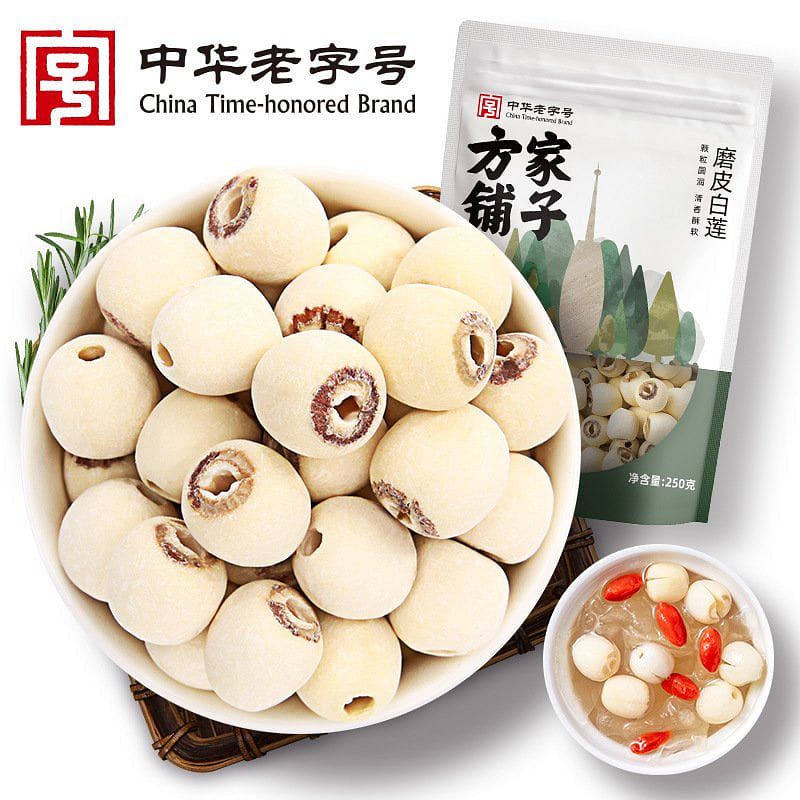
These cored lotus seeds are ideal for making soups or desserts, offering a delicate and refined texture.
Our authentic ingredients are sourced directly from "Lotus City"—Xiangtan, Hunan. Xiangtan boasts a humid climate with four distinct seasons and an average annual temperature of approximately 17°C. Abundant sunshine and rainfall create optimal climatic conditions for the cultivation of high-quality lotus seeds.
Utilizing a specialized peeling and coring process, our seeds are harvested fresh during the peak season. We employ a physical hulling and coring method—eschewing chemical treatments—to eliminate any bitterness, resulting in a naturally sweet, soft, and floury texture that is sure to delight your palate.
We maintain strict quality control from the source through to processing. We meticulously select lotus seeds that are pristine white, plump, and uniform in size, ensuring a high coring rate and a consistently sweet, soft, and floury quality.
1. Do these peeled white lotus seeds require soaking?
No, soaking is not necessary. These peeled white lotus seeds cook quickly and soften easily; simply rinse them and add them directly to your pot.
2. Why do the peeled white lotus seeds have spots on their surface?
The spots visible on the surface of the peeled white lotus seeds are remnants of the red skin left behind after the hulling process; they are completely safe to consume.
3. Why is there white powder on the lotus seeds?
During the physical hulling process, the constant friction against the surface of the lotus seeds generates a fine powder. This powder consists of the natural starch found on the surface of the seeds; it is a completely normal occurrence, and the product is safe to eat.
4. Since these are advertised as "cored" lotus seeds, why do some still contain residual cores? Because the coring process is performed by machinery, a small percentage of the lotus seeds may occasionally retain a residual core. The primary reason for coring is to eliminate the bitterness associated with the lotus seed embryo (core), which can affect the overall flavor; however, the core itself possesses high nutritional value and is perfectly safe to consume.
Return policy
See details
Disclaimer
Product descriptions on Weee!'s website and app are for informational purposes only. See our disclaimer
Fangjiapuzi Lotus Seeds Dried Coreless 250 g
Cooking Ingredient
$
17
99
$2.03/oz